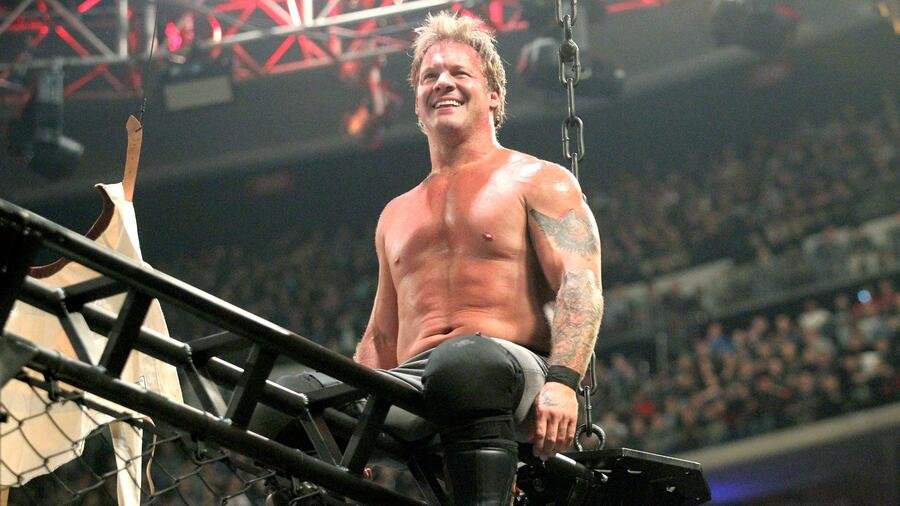
Quick Summary: Chris Jericho spoke with GamesHub about two of the most interesting topics surrounding his career. He broke down exactly how the Judas acapella moment came together during his 366-day feud with MJF in AEW, calling it one of the coolest things he has ever been part of and one of the most underrated moments in wrestling history. He also explained his philosophy on character reinvention, crediting David Bowie as his primary inspiration and making the case that changing constantly is the only way to avoid becoming a nostalgia act. Jericho said the goal is to keep evolving, keep making people uncomfortable at first, and trust that the work will eventually connect.
Chris Jericho on the Judas Acapella Moment: One of the Coolest Things He Has Ever Done
There are moments in professional wrestling that stick with you for years. The Judas acapella moment from Chris Jericho’s 2021 feud with MJF is one of them.
Jericho spoke about it in detail during a recent interview with GamesHub, and his account of how it came together is as interesting as the moment itself.
The context matters here. Jericho and MJF were in the middle of a 366-day feud, a year and a day of storytelling that is widely regarded as one of the best long-term programs AEW has ever produced. One of MJF’s stipulations during the feud was banning Judas from being played during Jericho’s entrance. The creative challenge became finding a way to make that stipulation feel real while also giving the moment somewhere to go.
Here is what Jericho said about it:
“It was a great moment. We were doing the storyline with MJF, and he had all these stipulations. One of them was banning Judas from being played. The idea came up, I think it was collaborative, the whole storyline lasted exactly 366 days, a year and a day, that we should ban the song and see what the crowd does.”
The production meeting that followed tells you a lot about how creative decisions get made in wrestling. Everyone had a theory about how to force the moment to work.
Jericho continued:
“There were a lot of theories in the production meeting about how to make it work. One producer was adamant we needed to put the lyrics on the screen with a bouncing ball. Someone else wanted to put lyrics under the chairs. Everyone had ideas.”
The person who cut through all of it was AEW President Tony Khan.
“Tony Khan and I talked about it, and he said, ‘When you go to a concert, people know the words or they don’t.’ That’s the organic nature of it. If you force it, it’s not going to be as cool.”
Jericho accepted the risk. If the crowd did not pick it up, the heel’s plan would look more effective. If it worked, it would be something genuinely special. The result was somewhere between nerve-wracking and unforgettable.
“The first ten seconds were a little rough, but by the third line of the song everyone clicked and got on the same page. Some people had the lyrics on their phones. That’s fine. But that was one of the coolest moments I’ve ever been part of, and I think it’s actually a fairly underrated moment in AEW history and in wrestling history. That’s the only time I can ever remember that happening that way. It was the one time where Fozzy and wrestling collided perfectly.”
He is right that it is underrated. The moment worked because nobody manufactured it. The crowd either knew the song or they did not, and enough of them did to turn an entrance into something that felt genuinely alive. That kind of organic crowd participation is nearly impossible to plan and almost never happens by accident.
Chris Jericho on Character Reinvention: Why David Bowie Is the Blueprint
The second major topic in the GamesHub interview was the question of which character Jericho finds most creatively unique across his long career. His answer was more interesting than a simple ranking.
Jericho said:
“It’s hard to single one out because there have been so many reinventions over so many years. That idea comes directly from David Bowie, honestly. I’m a huge Bowie fan, and he was never the same guy twice. Every record was different in imagery and sound. At the core it was still Bowie, but you could go to a Halloween party and see ten people dressed as Bowie from different eras and recognize every single one of them.”
The Bowie comparison is not a casual name-drop. It is a genuine creative philosophy that Jericho has applied consistently across WWE, AEW, WCW, and every other chapter of his career. The core of who he is stays recognizable while the surface presentation keeps changing.
He applied the same logic to his own catalog of characters:
“I think you could do the same with Chris Jericho. The ones people still talk about most are Y2J, obviously. Then things like ‘Never, Ever Again’ from WCW. ‘You just made the list’ was only around for maybe six or eight months, but it still resonates. I now do it on Cameo and people are constantly asking me to put them on it.”
The “you just made the list” detail is worth noting. That character phase lasted less than a year and people are still paying for Cameo videos referencing it more than a decade later. That is the measure of a character that genuinely connected.
Jericho then addressed the thing most long-tenured stars are afraid to talk about honestly. The danger of staying the same for too long.
“The main thing for me is I never want to be a nostalgia act. I want to keep changing, keep doing things that make people angry at first. When I stopped using the countdown, cut my hair, changed from long tights to short tights, it was like KISS taking off the makeup. People want the makeup. But if you leave the makeup on forever, you die. You have to try something new, commit to it, and most of the time it works.”
That last sentence deserves its own moment. Most of the time it works. Not always. Jericho is not claiming a perfect record on reinvention. He is saying that the willingness to try, to absorb the initial backlash, and to commit fully is what separates performers who last from performers who peak and fade.
Why This Interview Matters for Wrestling Fans
Chris Jericho has been doing this at the highest level since the mid-1990s. He has worked in WCW, WWE, and AEW. He has been the top babyface, the top heel, the comedy act, the serious main eventer, and the leader of multiple stables. He has fronted a rock band with genuine mainstream success while simultaneously being one of the most recognizable names in professional wrestling.
The fact that he credits David Bowie as his creative blueprint and thinks carefully about the difference between organic moments and manufactured ones tells you why he has lasted this long. Most wrestlers at his career stage are working on legacy and nostalgia. Jericho is still thinking about what comes next and why it needs to be different from what came before.
That mindset is rarer than any championship reign or memorable catchphrase.
Coverage by Vijayabalaji, WWELiveTV.com. Covering professional wrestling since 2011.